Inbound-led outbound: Turn inbound signals into a predictable pipeline
Published:
January 6, 2026
Updated:
January 20, 2026
Most teams don’t have a lead problem.
They have a timing problem.
Inbound is working. Content is being consumed. People are regularly visiting pricing & landing pages, engaging on LinkedIn, signing up for a webinar, clicking ads... Signals are there.
But revenue doesn’t move.
Why?
Because interest appears… and nothing happens fast enough.
Inbound-led outbound (ILO) exists to solve that exact gap – the space between buyer intent and sales execution.
Let’s break down what’s failing and how inbound signals reshape outbound.
What is inbound-led outbound (ILO)?
Inbound-Led Outbound is a revenue execution model where outbound outreach is triggered, informed, and prioritized by inbound signals – not by static lists or guesswork.
This is not:
- “warm outbound”
- “ABM with better copy”
- “sending messages because someone visited your site”
Inbound-led outbound is about timing, context, and controlled execution at scale.
The outbound motion is completely led by inbound behavior – not scheduled independently from it.
Why traditional cold outbound breaks at scale?
Your cold outreach strategy didn’t suddenly stop working. It stopped working predictably.
At small volume, almost anything works. At scale, everything breaks.
What actually happens when teams scale cold outbound campaigns:
- Response rates drop
- Sender health degrades
- Platforms throttle activity
- Personalization turns into theater
- Sales teams optimize activity, not outcomes
Cold outbound asks sales teams to manufacture relevance where none exists. That’s expensive, slow, and increasingly fragile.
Outbound marketing without signal becomes a volume game. And volume is the first thing platforms punish.
Why is pure inbound too slow for revenue teams?
Inbound has the opposite problem. It works – but on marketing time, not revenue time.
This means that inbound marketing creates interest, but:
- nurture cycles are long
- handoffs are slow
- signals decay quickly
- sales often enters too late (when quality leads have already moved on)
A buyer reads your content, compares vendors, engages on social media, listens to your podcast, and mentally shortlists (aka mapping their pain points to possible solutions) – before they ever book a demo. If nobody engages during that window, the moment is gone.
This is a common challenge for SaaS teams especially, where inbound interest builds early but sales often enters too late.
Basically, inbound strategies open the door, but outbound efforts are what “welcome the guests” and make them feel good there (or leave 👻).
🚀 How fast is “fast enough” in inbound-led outbound?
Speed isn’t about being aggressive. It’s about showing up while the buyer is still paying attention. The moment someone shows intent, a clock starts ticking. Not days. Hours.
The reality most teams underestimate:
- Buyers don’t wait for you to follow up
- Interest decays quickly once research is done
- The fastest responder often sets the tone for the deal
In practice, “fast enough” usually means:
- Same day outreach for strong inbound signals
- Within a few hours for high-intent actions (pricing, comparison pages, buying guides)
- Never “we’ll get to it next week”
This doesn’t mean every signal deserves instant outreach. It means that once a signal is qualified and becomes a clear inbound lead, execution shouldn’t be slowed down by manual workflows, rep availability, sender limits, or internal handoffs.
And no, the goal isn’t to be first at all costs. The goal is to be present while the buyer is still in decision mode.
That’s the difference between starting a conversation and chasing one that has already moved on.
The inbound-led outbound Model (I-L-O)
Inbound-led outbound works when it’s treated as a system, not a tactic. Not a collection of disconnected lead generation strategies.
That system has 3 parts:
1. Identify: Capture real inbound signals
ILO focuses on meaningful and high-quality signals from your target audience, such as:
- high-intent website behavior
- LinkedIn engagement with relevant & valuable content
- repeated content consumption
- interaction with buying-stage assets
Tools like intent platforms and engagement capture systems surface these signals in real time.
If you can’t see intent clearly, you can’t act on it.
2. Leverage: Enrich, score, and prioritize
Signals alone don’t tell you who to contact first. That’s where enrichment and scoring come in.
This layer answers questions like:
- Does this person match our ideal customer profile?
- Is the company a real fit?
- How strong is the buying signal?
- Is this worth immediate outbound attention?
Enrichment and scoring turn raw signals into prioritized opportunities (qualified leads).
3. Outreach: Execute while the signal is still hot
This is where most outbound lead generation efforts fail.
They have signals. They have enrichment. But execution is slow, manual, or unsafe to scale.
In scalable outbound strategies, timing matters more than perfect personalization.
LinkedIn is the natural execution channel here:
- buyers are already there
- context is visible
- conversations feel lighter than email
However – LinkedIn outreach at scale requires governance, control, and safety.
And this is where HeyReach becomes the execution engine in the ILO workflow.
HeyReach: The execution layer where ILO becomes operational
Inbound-led outbound only works if execution holds under pressure.
HeyReach makes sure it does.
It’s built to run outreach safely, at scale, and with full control over campaigns, senders, and workflows.
Below I'm sharing how inbound-led outbound works in practice with HeyReach sitting at the center of the stack.
1. Buyer intent shows up → a list is created
Inbound signals come from Trigify (LinkedIn engagement).
Those signals don’t live in isolation. They’re pushed further into a list (via Make/Zapier/API) that HeyReach can immediately act on.
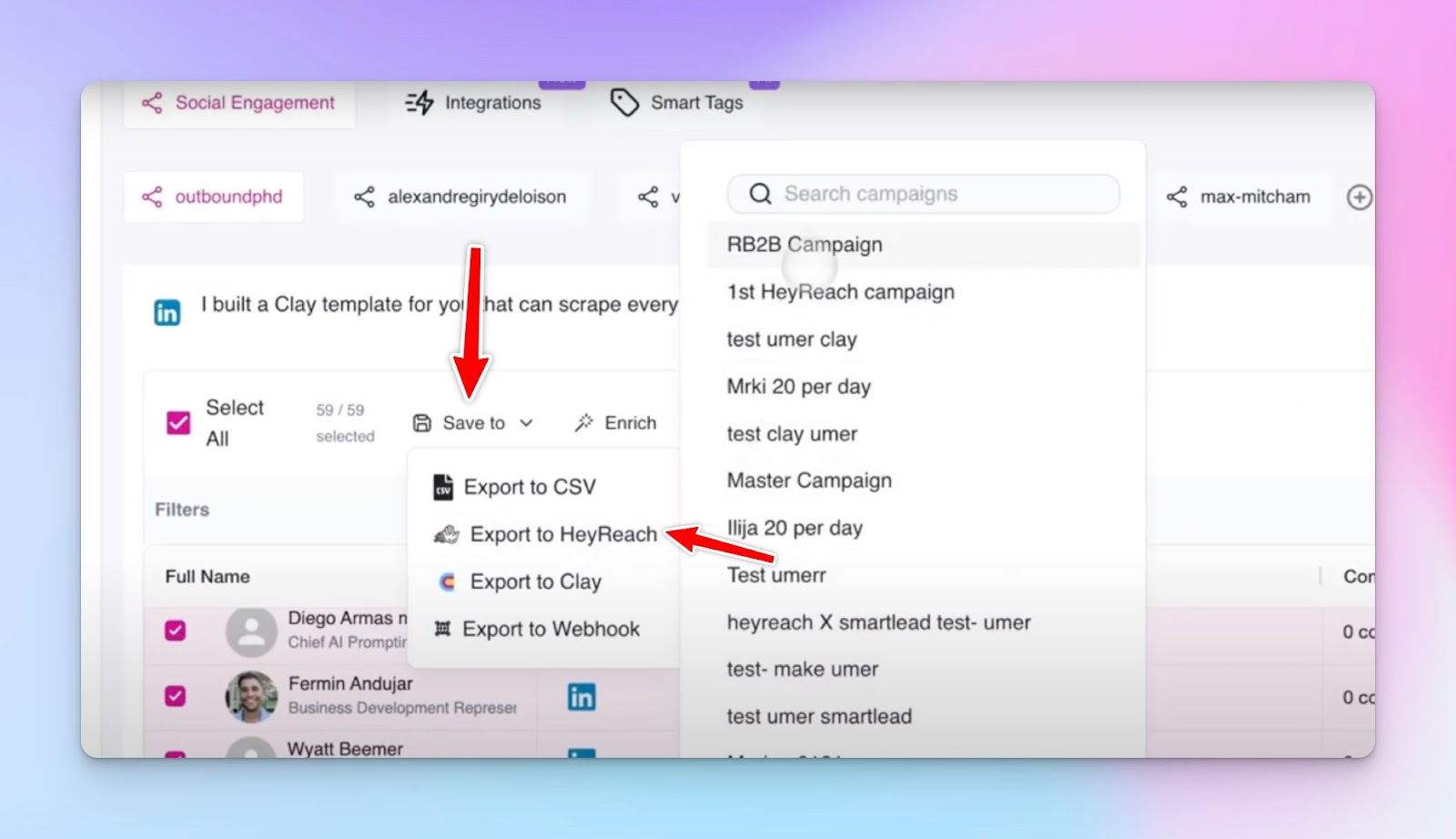
At this point, you’re not guessing who to contact. You’re working with people who just did something meaningful.
2. Leads are enriched and ranked before outreach starts
Clay enriches the raw signal list before it enters any campaign:
- role & seniority
- company size & industry
- LinkedIn profile data
- custom scoring (ICP fit + signal strength)
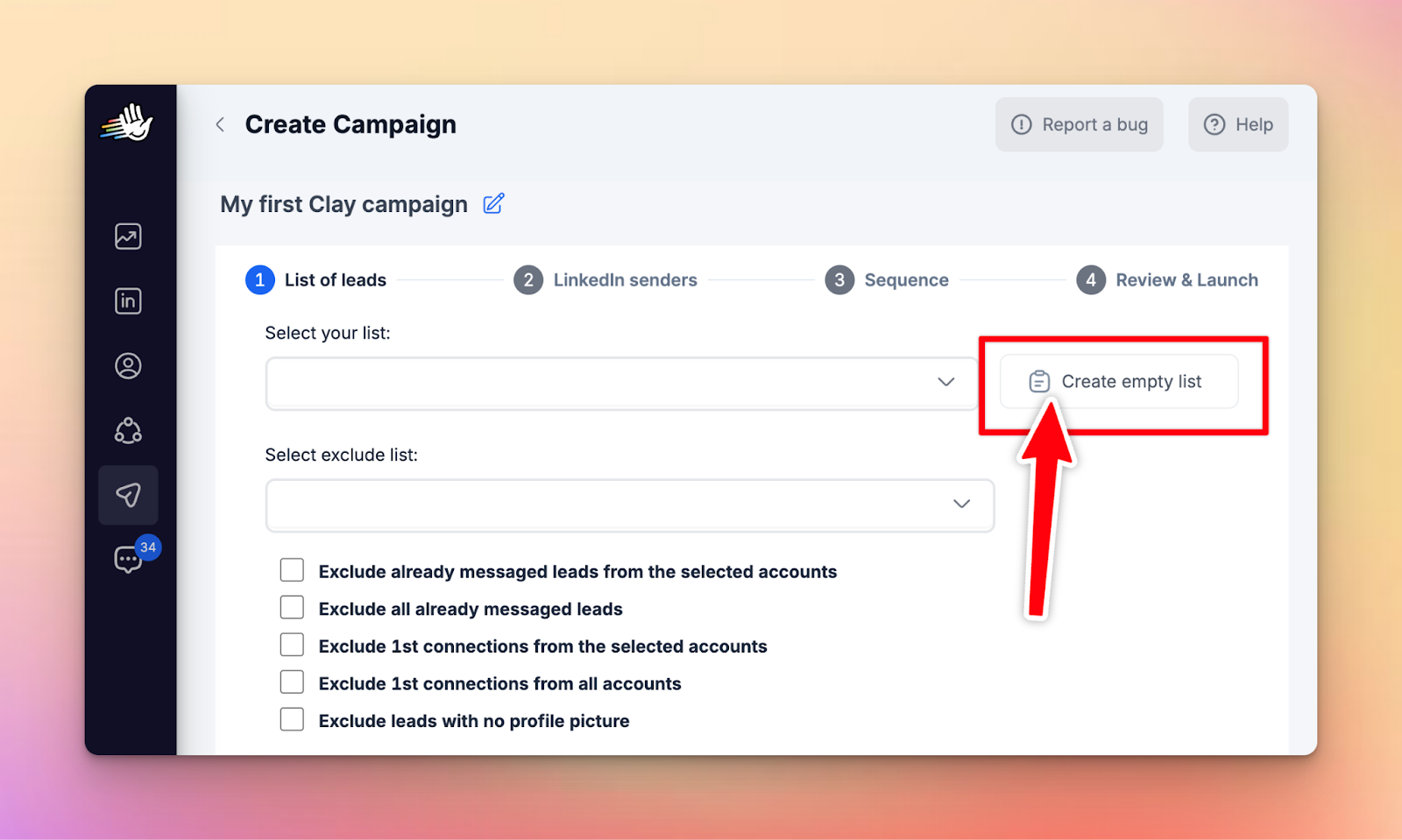
Your rules filter the list first (ICP fit + high-intent actions).
Only qualified leads enter HeyReach, so outreach volume stays controlled and sender health stays intact.
3. HeyReach launches outreach automatically
Once enriched leads enter HeyReach, execution kicks in:
- Leads are added to a prebuilt LinkedIn sequence
- HeyReach distributes them across multiple LinkedIn senders
- Each sender respects daily connection and message limits
- Sender rotation happens automatically, so no single account is overloaded
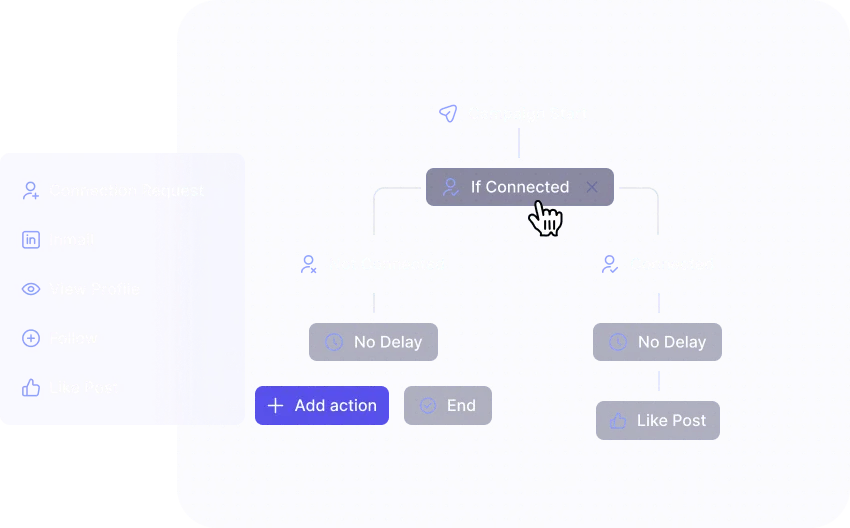
From the sales team’s perspective, this feels instant. From LinkedIn’s perspective, it looks normal and human.
This is the key ILO moment: outreach happens while the signal is still hot – without manual work or account risk.
4. LinkedIn + email run in parallel for high-intent leads
For stronger signals, HeyReach doesn’t work alone. Through Instantly integration:
- the same lead can enter an email sequence
- LinkedIn and email run side-by-side
- timing stays coordinated across channels
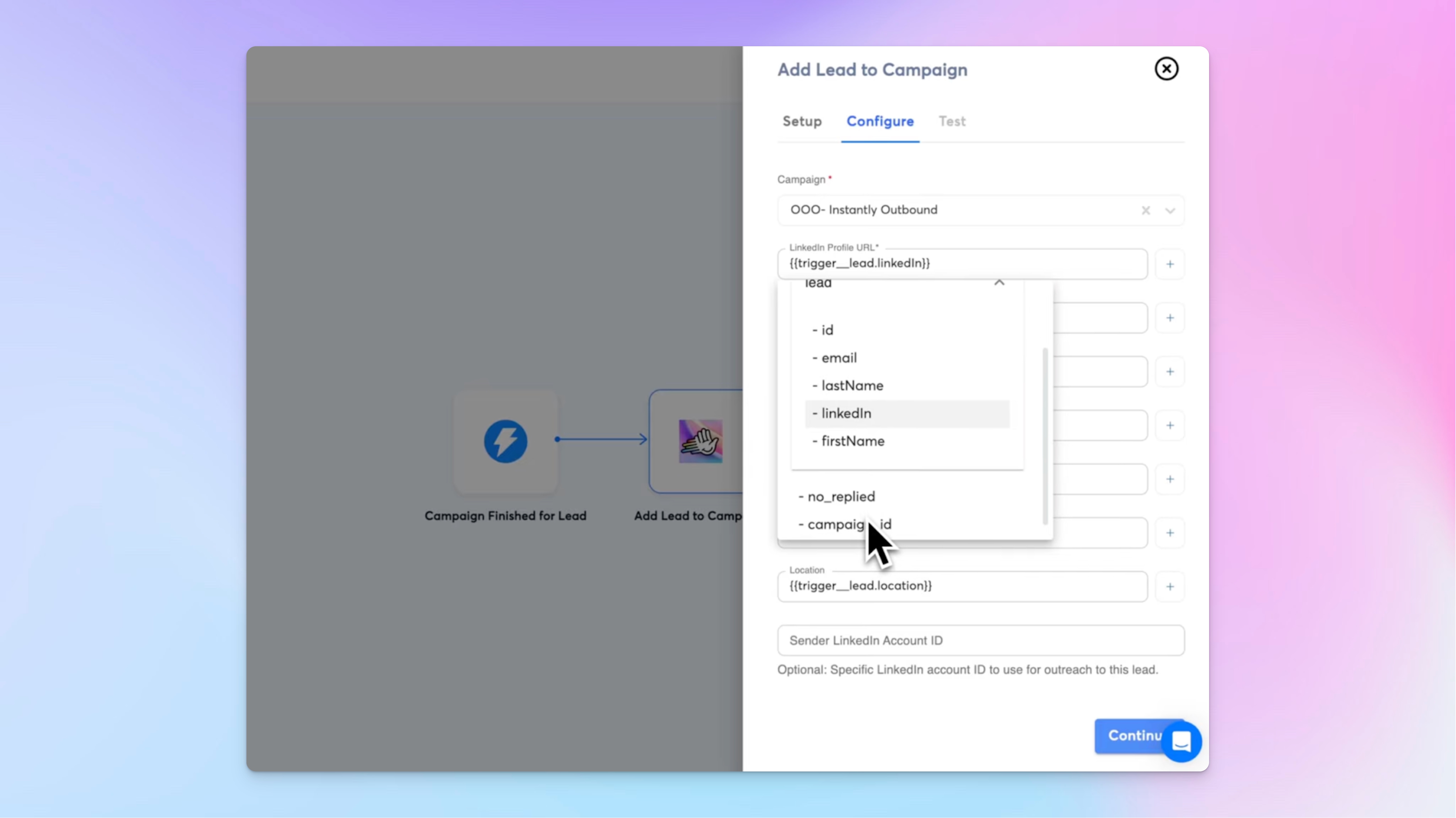
This avoids the “wait and see” problem and increases response odds without spamming.
5. All replies land in one place
As soon as prospects respond:
- every LinkedIn reply appears in HeyReach’s Unified Inbox
- conversations get tags (interested, ask later, not now, etc.)
- teammates can jump in without logging into individual LinkedIn accounts
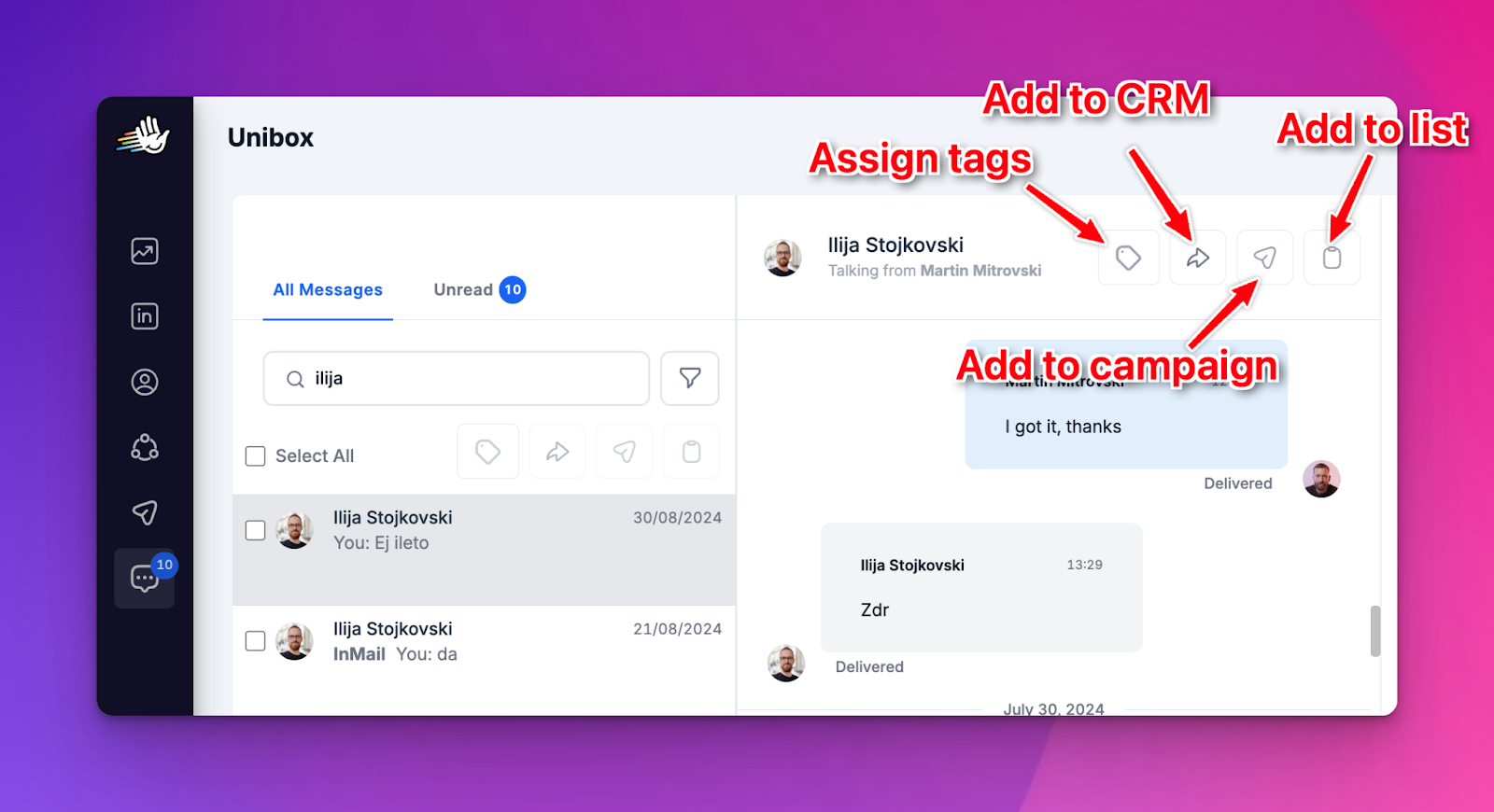
This removes inbox chaos and shortens response time, which matters a lot when inbound intent is fresh.
6. CRM is updated automatically
Replies, statuses, and key actions sync back to HubSpot:
- lead status changes
- conversations are logged
- follow-up tasks can be triggered
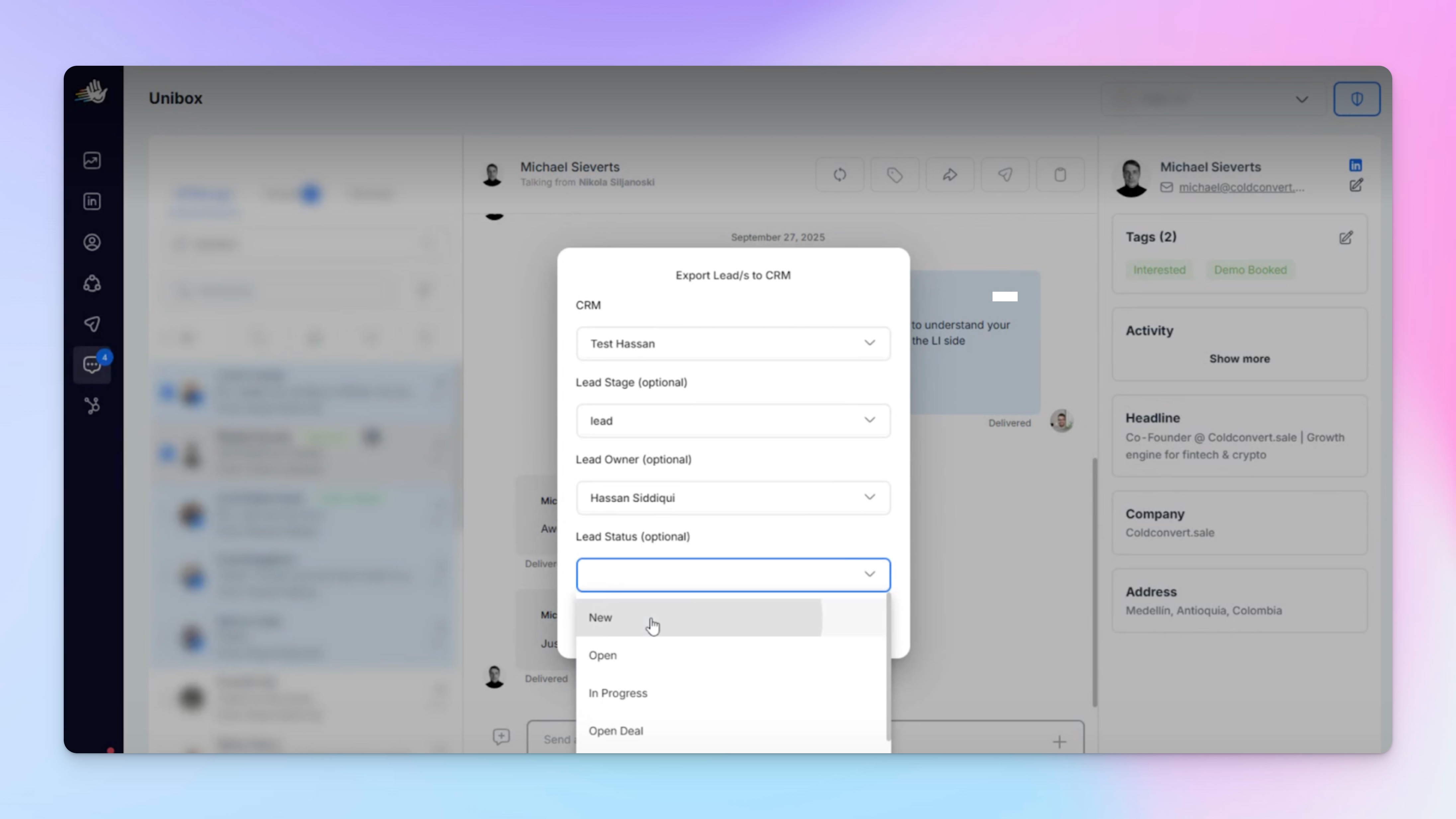
Sales doesn’t need to copy-paste anything. The CRM reflects what’s actually happening in outreach.
7. Performance feeds back into the system
HeyReach shows what’s working in real time:
- which signals lead to replies
- acceptance and response rates per sequence
- sender-level performance
Teams adjust:
- which signals trigger outreach
- how fast they act
- which sequences convert best
Over time, the system gets sharper, better and more effective.
Benefits of inbound-led outbound: Why does this model actually work?
The impact isn’t isolated to sales. It shows up across pipeline quality, velocity, and predictability.
Let’s go through the main benefits. 👇
Higher conversion rates (because timing is finally right)
Inbound-led outbound dramatically improves conversion rates for one simple reason: sales engages when the buyer is already interested.
These are not cold leads being interrupted. They are buyers who have:
- consumed content
- explored solutions
- shown intent
Outbound in this model doesn’t introduce the problem. It continues an existing one.
As a result:
- fewer conversations start from zero
- less time is spent educating
- more time is spent qualifying and moving forward
Conversion improves not because messaging is clever, but because the moment is just right.
Shorter sales cycles (less convincing, more progressing)
When outbound follows inbound signals, the sales process shifts from convincing to progressing. Buyers are already partway through their decision journey.
That changes the nature of the conversation.
Instead of:
- explaining basics
- building initial trust
- justifying relevance
Sales steps into:
- clarification
- comparison
- next steps
The result is a visibly shorter sales cycle. Not because deals are rushed, but because early-stage friction is removed.
Higher sales productivity (less manual work, better conversations)
In a traditional outbound sales setup, productivity is measured by activity.
In an inbound-led outbound system, productivity is measured by signal quality.
SDRs spend less time:
- prospecting blindly
- qualifying uninterested leads
- repeating the same explanations
And more time:
- responding to real interest through targeted outreach
- having contextual conversations
- working opportunities that can actually close
This shift doesn’t just increase output – it changes how sales feels day to day. Less grind. More momentum.
Better buyer experience (because outreach feels relevant)
From the buyer’s perspective, inbound-led outbound feels fundamentally different. Here we’re talking about super personalized outreach, meaning:
- in context
- at the right time
- with awareness of what they’ve already explored
This changes outbound from an interruption into a continuation.
The experience feels respectful, relevant, helpful.
And that perception matters, especially in super competitive B2B markets where brand trust compounds over time.
Stronger sales & marketing alignment (naturally, not by process)
Inbound-led outbound aligns sales and marketing not through meetings or SLAs, but through shared incentives.
Marketing’s job becomes: generating signals through inbound tactics that actually convert
Sales’ job becomes: acting on those signals quickly and consistently
Feedback loops tighten naturally:
- sales sees which content and signals lead to pipeline
- marketing understands what intent actually looks like in practice
Instead of operating as two teams handing work back and forth, they operate as one system.
Cleaner data and better decisions
Inbound-led outbound creates clearer data because actions are tied to signals (coming from SEO, content, and real buyer behavior).
Teams can finally see:
- which inbound signals lead to replies
- which signals lead to meetings
- how fast interest turns into pipeline
This clarity improves:
- prioritization
- forecasting
- experimentation
And because execution is consistent, insights become usable in practice.
More predictable pipeline (the real win)
The biggest benefit of inbound-led outbound isn’t volume. It’s predictable.
When outbound execution is tied to inbound intent:
- pipeline creation becomes repeatable
- response time becomes measurable
- outcomes become less dependent on individual reps
Revenue stops being a guessing game and starts behaving like a system. That’s the difference between “running campaigns” and running operations.
Where do most ILO setups fail?
Most teams don’t fail because the idea is wrong. They fail because the system is incomplete.
Common failure modes:
- Signals collected, but never acted on
- Enrichment without prioritization
- Outreach tools that ignore sender health
- CRMs that store data but don’t trigger action
- “Automation” without guardrails
Inbound-led outbound is not about more tools.
It’s about connecting signal → decision → execution without friction – with HeyReach as the operational hub that keeps things from breaking.
How to measure success in inbound-led outbound?
Inbound-led outbound changes what you measure.
Vanity metrics matter less.
Execution metrics matter more.
Key indicators:
- Signal → first touch time
- Reply rate by signal type
- Inbound-assisted outbound conversion
- Meeting rate per enriched signal
- Pipeline velocity, not lead volume
If inbound creates interest, these metrics tell you whether you’re capturing it – or wasting it.
How to tell if inbound-led outbound fits your team?
Inbound-led outbound isn’t for everyone. It’s best for teams that:
- already generate inbound interest from potential customers
- sell in competitive B2B markets
- manage multiple LinkedIn senders
- care about predictable pipeline, not just activity
If your calendar is empty and your analytics are quiet, start with inbound.
If your analytics are full but revenue lags – ILO (powered by execution + HeyReach) is your gap.

Try it for free
Frequently Asked Questions
Is inbound-led outbound just another name for “warm outbound”?
No. Warm outbound usually means reaching out to slightly better lists or past contacts. Inbound-led outbound is different because outreach is triggered by real, recent inbound signals and executed while buyer interest is still active. It’s not about warmer data. It’s about better timing and faster execution.
Do I need a lot of inbound traffic for inbound-led outbound to work?
Not necessarily. You don’t need massive volume – you need clear signals. Even a small number of high-intent actions (pricing page visits, buying-stage content, LinkedIn engagement) can drive strong results if outreach happens quickly and consistently.
Should every inbound signal trigger outbound outreach?
No – and that’s a common mistake. Inbound-led outbound is selective by design. Signals should first be qualified and prioritized (ICP fit, signal strength, intent). Once a signal is qualified, execution should be fast, but not every signal deserves immediate outreach.
Why is LinkedIn such a strong channel for inbound-led outbound?
Because it’s where buyers already are during research and evaluation. LinkedIn allows outreach to feel more contextual and conversational than cold email, especially when it follows inbound activity. The key is having safe, scalable execution, so timing doesn’t break delivery, which is where HeyReach perfectly fit into the system.