Autonomous AI agents in B2B sales: What works and what quietly breaks
Published:
May 30, 2026
Updated:
August 20, 2026
Building autonomous outreach stacks — Clay, n8n, HeyReach wired together — tends to hit the same wall.
The vendor demo runs on clean data. Production has stale signals, leads who changed jobs, and nothing resembling a complete profile. The first batch goes out and within 48 hours you're looking at wrong icebreakers, duplicate messages, a flagged sender account, and a prospect asking you to please stop contacting them.
HeyReach sits at the execution layer, where every failure mode that never makes the demo is visible. What separates teams that make these systems work is the unglamorous stuff: data quality gates, sender health logic, and knowing where not to let agents act alone.
I'll show you exactly how to build an autonomous AI outreach stack that works in production — what to set up, where it breaks, and how to fix it before it does.
Autonomous AI agents in B2B sales: the one question most teams skip
Before getting into what breaks and how to fix it, there's a framing question worth sitting with.
Most teams approach autonomous AI agents in B2B sales as a capability question: What can the agent do? The teams that actually get results from their AI systems ask a different question: What does our agent do when the data is bad?
Because data is always bad sometimes. Signals go stale. Leads change jobs. Enrichment returns a generic job title from a company called "Global Solutions LLC." Bad data will show up. The only thing that varies is whether the system was built for that moment — or whether the team just hoped it wouldn't get there. Get this right and autonomous outreach becomes truly scalable. Get it wrong and the Slack channel fills with screenshots.
3 decisions to make before building anything
1. Where does the agent make decisions vs. where do humans?
Philosophical as it sounds, it's really just a workflow design question with a very specific deliverable: a written list of handoff points.
At what point does an autonomous action fire versus a task surfacing for human review? "The agent decides" is not an answer. "The agent personalizes the opener based on signal type, but a human approves before the first message goes to a Tier 1 account" is an answer. "The agent routes leads to sequences automatically, but any reply with a question routes to a human within 4 hours" is an answer.
The handoff document doesn't need to be beautiful. It needs to exist and be specific enough that two different people on the team would make the same call when reading it. Without it, human oversight means reviewing damage instead of preventing it. If the team can't produce this document, the agent doesn't have guardrails — it has vibes. And vibes don't hold up at scale.
2. What's the minimum data quality bar for a lead to enter the agent pipeline?
An agent personalizing from a LinkedIn profile with no recent activity, a job title that says "Consultant," and a company name that could belong to 400 different businesses will embarrass you. Not occasionally. Consistently.
"Consultant" at "Global Solutions LLC" is not a person. It's a liability with a LinkedIn profile.
The quality gate needs to be defined before building the enrichment flow, not after 300 cringe-worthy messages have already gone out. Get specific: What fields are required for a lead to pass? What's the maximum age of a signal — 30 days? 60 days? 90? What does "recent activity" actually mean on a LinkedIn profile, and how do you check for it in Clay before the lead moves forward?
Customer segmentation logic is the right place to start — the same criteria that define ICP segments should also define the quality gate. If a lead wouldn't qualify for your tightest ICP segment, it shouldn't qualify for autonomous outreach either.
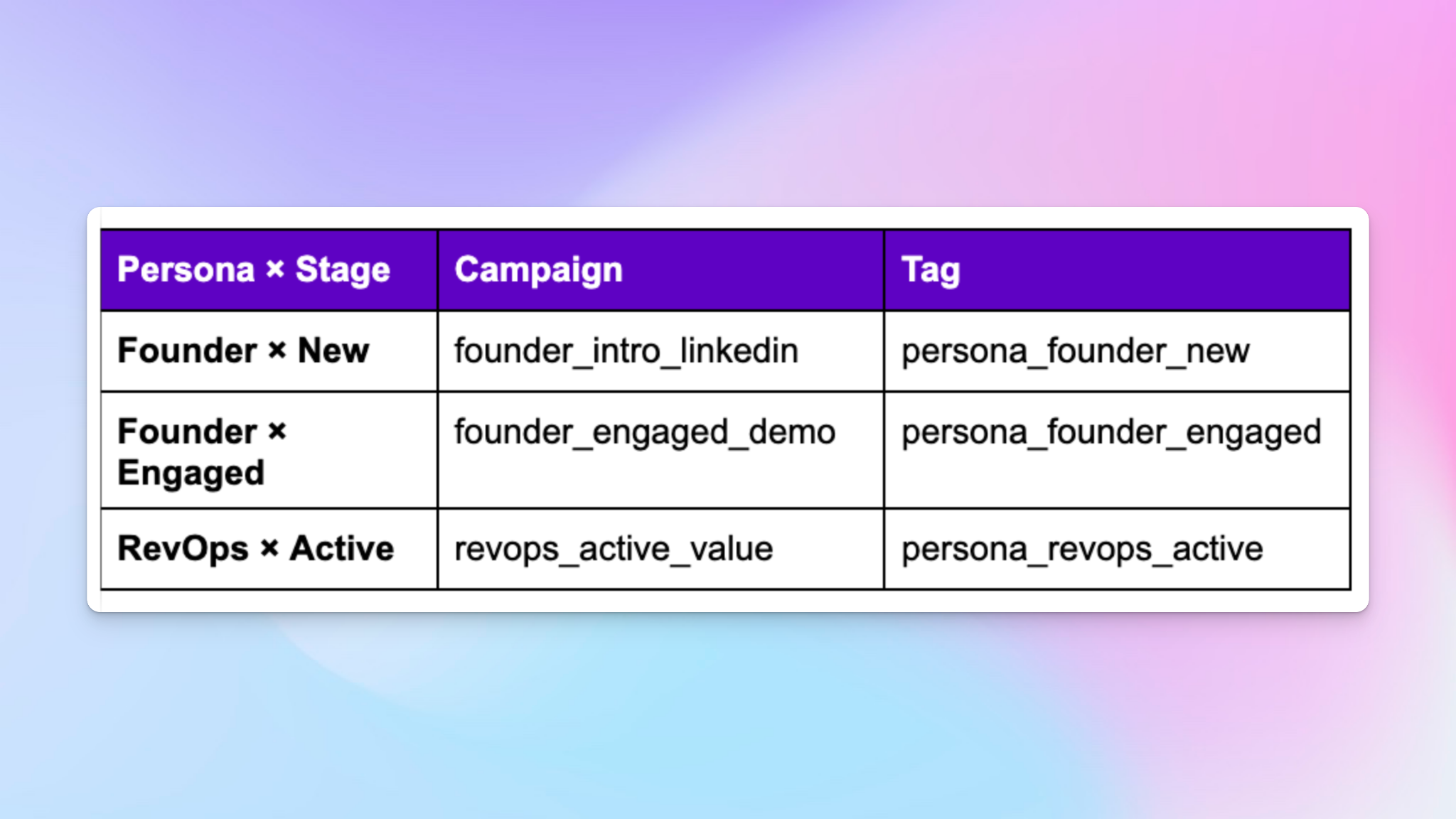
3. Which part of the process actually needs to be autonomous?
Automate what slows you down, not what already works. If the team writes good sequences but drowns in list-building, automate list-building. If there's a clean ICP but no way to catch real-time buyer intent signals at scale — a new role, a relevant hiring post, a tech install — that's where an agent earns its place. The goal is to fix the parts that slow the team down, not to automate for automation's sake.
Before deploying anything autonomous, find the actual bottleneck. The answer shapes what gets built, and since enrichment tools, orchestration platforms, and execution layers all carry their own pricing, it also shapes what the stack actually costs to run at scale.
The 4 failure modes of autonomous AI agents (and how to avoid each one)
Every one of these failure modes has played out in real HeyReach campaigns — across thousands of outreach sequences, not hypothetical ones. And none of them announce themselves before the damage is done.
Failure mode 1: Garbage in, cringe out
The agent fires a personalized message based on a stale signal. It congratulates someone on a funding round that closed 14 months ago. It references a job title the person no longer holds.
To the prospect, it reads as one thing: you didn't do your homework. You just made it look like you did — and that's worse than generic outreach. Generic outreach gets ignored. A hallucinated personalization gets remembered for all the wrong reasons.
It happens in setups that automate enrichment but skip the freshness check. The Clay workflow pulls job titles, posts, funding data — thorough enrichment, but nobody set a rule that a signal older than 90 days should gate the lead out. The agent finds what it can, generates a line, and sends it.
The fix: mandatory freshness checks in Clay before any message goes out. Define a maximum signal age, enforce it as a hard gate. Stale or missing signal — the lead gets held or exits the flow entirely.
Our benchmark data backs this up: campaigns with reply rates below 13% but healthy acceptance almost always have a messaging problem, not a targeting one. Stale personalization is one of the fastest ways to land there.
Failure mode 2: The duplicate problem
A lead exists in three lists across two campaigns, managed by different sender accounts. The agent fires three times. The prospect replies once — confused and annoyed. LinkedIn flags one of the senders. Two days of firefighting follow for something that should never have happened.
The reason this one hurts is that it's invisible until it's already done damage. From inside each individual campaign, everything looks fine. Acceptance rates are normal. No errors in the logs. The problem only shows up at the prospect's end, when they get a third connection request from someone at your company within a week. At that point they're not a lead — they're a person filing a complaint.
It happens two ways — one obvious, one sneaky. The obvious version: the same lead gets manually added to multiple campaign lists because different team members pulled from similar sources. The sneaky one: a lead enters one campaign via an n8n workflow trigger, then gets picked up again a week later when a second enrichment batch runs and the deduplication logic wasn't set up to check existing campaign membership.
Deduplication has to happen at the orchestration layer — in n8n or Make — not inside HeyReach. Before any lead enters a sequence, the workflow needs to check two things: Is this lead currently active in any HeyReach campaign? And what does their HubSpot deal stage say?
If either check returns an active record, the lead doesn't enter. Full stop. This is also where permissions matter — the orchestration layer needs read access to both HeyReach campaign membership and HubSpot deal data to make this check reliably. Treat that access as optional and you'll miss existing conversations — and the same prospect ends up in three sequences at once. The orchestration layer is the right place for this logic — it has visibility across campaigns and systems. HeyReach sees within a campaign. That's not the same thing.
Failure mode 3: Volume without velocity awareness
The agent is technically within daily message limits per account. But five sender accounts all spike on the same Tuesday afternoon because a large Clay enrichment batch finished processing simultaneously. Nobody set a rule about staggered release. Each account sent within its individual daily cap. Two of them got flagged by the end of the week anyway.
LinkedIn's detection isn't just per-account — it's pattern-based across the workspace. A coordinated spike in activity across multiple senders associated with the same infrastructure, on the same afternoon, targeting leads from the same enrichment source, looks like exactly what it is: an automated system that just finished a batch job. Ten accounts sending 30 messages at once looks nothing like ten accounts sending 30 messages staggered across a full working day — and LinkedIn knows the difference. The second approach is what keeps you from being flagged as bots.
In HeyReach research across 96,051 campaigns, the data is clear: campaigns that scale volume without signal-based targeting show significantly higher restriction rates than those using tight automated LinkedIn messaging practices with controlled pacing.
The teams running 6–20 senders with proper rotation and daily cap discipline consistently outperform both single-sender setups and large sender pools — their median reply rate hits 25%, compared to 22.22% for single-sender campaigns and smaller pools of 2–5 senders, and 21.94% for larger pools of 21–50 accounts. Governed senders outperform more senders every time.
As campaign volume scales from 50 to 1,000+ leads, acceptance rate declines only slightly — from 21.43% to 19.35% — while reply rates stay broadly flat. Sloppy upstream targeting is the problem, not scale.
Two things fix this. Stagger batch releases using HeyReach's account rotation logic so a single enrichment batch doesn't spike all senders at once. And cap how many new leads enter per day regardless of how many have cleared the quality gate. 800 qualified leads on a Tuesday morning is a queue, not a send list.
Failure mode 4: The agent has no memory
A prospect replied "not now, maybe Q3" six weeks ago. The agent, with no awareness of that reply, adds them to a new signal-triggered sequence when a relevant job posting fires. The prospect is furious. A warm lead just got burned, and the brand looks careless before the conversation even restarted.
Of all four, this one does the most reputational damage — it happens to people who were already interested. The hard work of getting a positive-but-not-yet reply gets undone by a system that didn't check whether the conversation had already started.
HeyReach's Unibox reply history and HubSpot deal stage need to be mandatory pre-checks in the agent workflow — not optional enrichment. Any lead that has an existing reply in Unibox, or a deal stage that indicates active engagement, doesn't enter a new sequence. The agent needs to know what's already happened before it does anything, including any sensitive data shared in previous threads.
Follow up on LinkedIn without checking reply history first and a warm lead becomes a burned one.
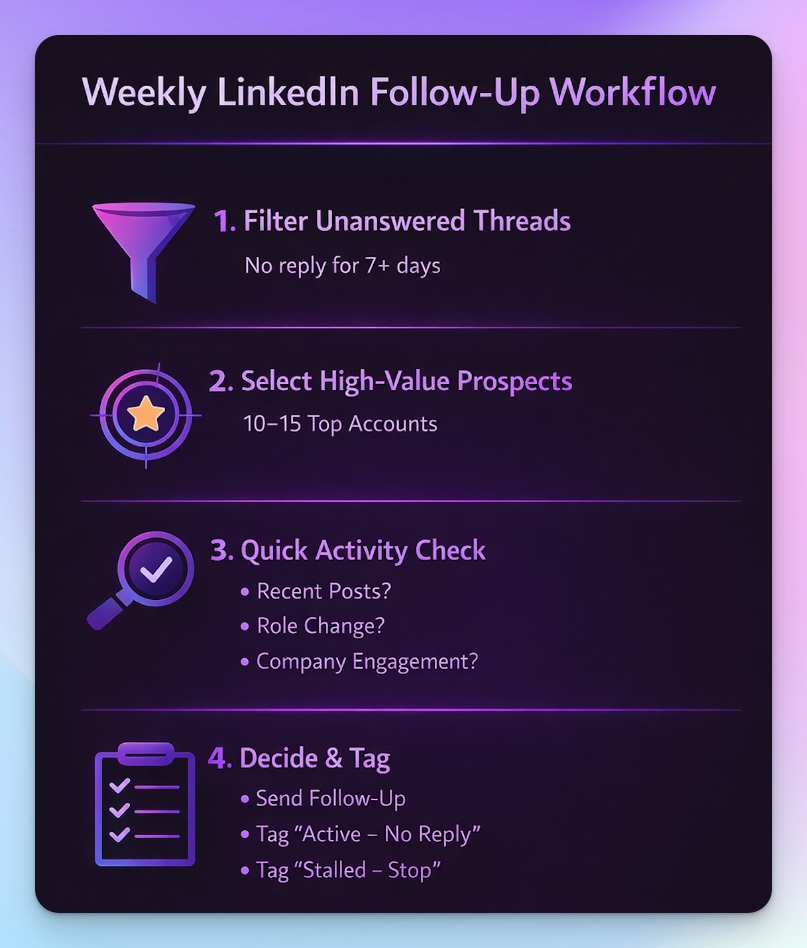
What a production-ready autonomous AI agent in B2B sales actually looks like
Every well-built autonomous outreach setup runs on the same logic: the agent's job is to find the right moment and hand it to a human-approved sequence — not to improvise.
The more an agent improvises without human intervention or rigid frameworks, the more failure points appear. Most autonomous systems fail not because the AI is bad, but because nobody defined clearly enough what it's allowed to do. Predefined rules about what the agent can and can't do on its own are what make it perform consistently. The best-performing setups deliberately limit what the agent can decide on its own, ensuring that critical decision-making processes remain under human oversight. Freedom is the enemy of reliability. With dozens of senders in play, the orchestration layer is what holds the whole thing together.
Signal layer
Clay watches for 2–3 signals that historically convert best for the ICP — job changes, relevant hiring posts, tech installs. Not 15 signals — 2 or 3. More signals introduce noise the agent can't sort through, and you end up back in failure mode 1 — personalizing from data that makes you look like you weren't paying attention. Teams almost always pick too many signals at first because more feels like more. It isn't.
Pick the signals that have actually correlated with replies and meetings in past campaigns. That requires actual research, not a gut call. If that analysis hasn't been done, do it before building anything.
Quality gate
Before enrichment runs, the agent checks three things in sequence. Is the signal fresh — within the maximum age defined? Is the lead's profile complete enough to personalize from (full name, current role, current company, some form of recent activity)? Is the lead already active in a HeyReach campaign or flagged in HubSpot with an existing deal stage?
Any failed check stops the flow. Full stop. The cost of letting a bad lead through is higher than the cost of holding it.
Personalization layer
A large language model generates a single opener — one line, based on the signal type and the lead's current role. Not a full message. Just the hook that slots into a proven sequence template the team has already written and approved.
LLMs can write full outreach messages. That's the problem. Letting the agent own the entire output means it's making calls it has no business making: tone, length, CTA framing, follow-up sequencing.
Too many decisions for a system that nobody's watching at each step. The agent writes one line. The template, built and tested by humans, does the rest. The reply rates show it.
Execution via HeyReach
The lead goes to the right sender account — daily caps already set, account rotation already configured. Account rotation is handled by HeyReach — the orchestration layer in n8n or Make doesn't need to think about which specific sender to use. It passes the lead with the correct campaign tag via APIs, and HeyReach distributes it safely across the sender pool. Orchestration handles the logic, HeyReach handles the execution — and that division is what keeps the system clean when scaling to dozens of senders.
Reply monitoring
HeyReach Unibox catches all responses across every sender account in one place. High-intent replies — anything indicating real interest, a question, or a specific timeline — get flagged immediately for human follow-up. All replies sync back to HubSpot automatically, which means the deal stage updates without anyone manually logging anything. Over time, that reply data becomes a record of what messaging lands, what gets ignored, and which signals actually convert. That updated deal stage is what the quality gate checks the next time this prospect's name appears in an enrichment batch.
That feedback loop — reply in Unibox → HubSpot update → gate check on next signal — keeps failure mode 4 from happening twice.
Before you flip the switch: a pre-launch checklist
Run through it before the switch gets flipped. One unchecked item is usually where the Slack screenshots start.
Signal layer
- 2–3 signals identified that have historically converted for your ICP
- Maximum signal age defined (e.g. 60 days) and enforced in Clay as a hard gate
Quality gate
- Required fields defined before enrichment runs
- Deduplication check built in n8n or Make — not inside HeyReach
- HubSpot deal stage check included as a mandatory pre-check
Personalization
- LLM generates only the opener — one line, not the full message
- Sequence template written and approved by a human before deployment
Execution
- Daily caps set per sender account
- Batch release staggered — no simultaneous spike across senders
- Account rotation configured in HeyReach
Reply monitoring
- Unibox reply history check runs before any lead enters a new sequence — not as optional enrichment
- HubSpot sync active and deal stage updates automatically after every reply
Automation handles volume, but humans handle intent
The honest answer to "can this actually be fully automated?" is: mostly yes. But the "mostly" matters a lot, and ignoring it is how teams end up burning warm leads with cold sequences.
Yes, these can be fully automated for a well-defined ICP with clean data:
- Signal detection and enrichment via Clay
- Data quality gating and deduplication in n8n or Make
- Personalization of sequence openers based on signal type
- Initial outreach via HeyReach with account rotation and safe sending limits
- Reply logging and HubSpot sync via Unibox
No, this should not be automated:
The first reply. Not because AI can't generate a response — it can, and often a decent one. AI agents for customer support, such as Nextiva's XBert, Botpress or Zendesk AI, handle routine queries at scale every day and they're genuinely good at it. But B2B sales replies aren't customer support tickets — they're the moment a potential relationship either deepens or dies. A prospect who replied "this is interesting, can you tell me more about how it works for companies our size?" and received a generic follow-up sequence as a response is a prospect you've lost. Probably for good.
Automate follow-ups after no reply. The moment someone responds, a human takes over. That's the line.
The nuanced middle: LinkedIn-specific volatility
LinkedIn's platform behavior changes. Limits shift. Detection algorithms and patterns evolve. Any fully autonomous setup needs a human reviewing sender health weekly, not monthly. What looked safe in January may not be safe in March. New accounts need different warmup pacing than established ones. Accounts that have been running hot need to be backed off before LinkedIn makes that decision for you.
All of that is a reason to keep a human watching the system, ready to intervene — not a reason to avoid automation entirely. LinkedIn is a social media platform with increasingly sophisticated detection. What works today may be flagged tomorrow — sender health governance isn't optional.
"Human in the loop" means approving every action. "Human on the loop" means monitoring and intervening when needed. The efficiency gain lives in that second model. Build the right safeguards, define the right intervention triggers, and let the system run.
The numbers make this concrete: campaigns running under 30 days show a median acceptance rate of just 13.33% and a reply rate of 14.29%. Campaigns running 180+ days show 26.99% acceptance and 28.26% reply rate. Part of that gap is survivorship bias — stronger campaigns stay live longer because they earn the right to. But sender reputation builds over time too — and accounts that get flagged early don't get that chance. Weekly sender health review is what keeps the compounding going.
Automate everything upstream of the first reply — detection, enrichment, gating, sequencing. Keep a human on the reply itself and on weekly sender health. That's what actually holds up in production.
Why the best AI agent setups send less, not more
The setups that actually perform well end up sending less — and doing it with enough precision that reply rates, sender reputation, and daily limits all grow together over time.
When signal-based outbound drives sequencing, reply rates improve. When reply rates improve, HeyReach sender accounts warm up faster, reputation builds, and daily limits can grow sustainably over time. More volume eventually — but earned through precision.
The analysis of 96,051 campaigns, shows that 10.7% of campaigns with accepted connections got zero replies. Those leads accepted the connection — the failure happened after. They opened the door and nothing came through it. Campaigns running with signal-based targeting and controlled pacing consistently show stronger reply-to-acceptance conversion than campaigns optimizing purely for volume. The typical campaign converts about 1 in 5 accepted connections into a reply. The stronger-performing ones — above the 75th percentile — convert nearly 29% of accepted connections into replies.Fewer, better-targeted messages means higher reply rates — and higher reply rates are what warm up sender accounts, build reputation, and grow daily limits over time.
The trap is the opposite: using agents to justify sending more leads into a broken qualification process. An autonomous agent doesn't fix bad targeting. It accelerates it — more noise, more flagged accounts, more Slack screenshots. Just faster.
HeyReach isn't a firehose. It's the precision valve at the end of a well-engineered pipeline. By the time a lead reaches it, it's already been through three filters. The agent's job is narrow: find the right moment, pass it to a proven sequence, and get out of the way.

Try it for free
Frequently Asked Questions
What is an autonomous AI agent in B2B sales?
An autonomous AI agent in B2B sales is an AI system designed to execute multi-step complex tasks — signal detection, lead enrichment, personalization, message sequencing — without requiring a human to trigger each individual action. Unlike traditional automation that runs a fixed script, an agent makes decisions based on conditions: if the signal is fresh and the lead passes the quality gate, it fires. If not, it holds. The key distinction is that the agent works toward an outcome — it's not waiting for instructions at each step. It will iterate based on what it finds. A standard sequence tool or off-the-shelf AI solution can't do that, especially when compared to an advanced multi-agent architecture.
How is an autonomous agent different from sales automation?
Traditional automation runs a fixed sequence on a fixed schedule. It's rule-based: if this, then that. An autonomous AI agent responds to conditions in real time, evaluating each situation independently based on real-time data. It checks whether a lead is already in an active campaign before adding them. It evaluates signal freshness before generating a personalized message. It routes a lead to a different sender if one account is approaching its daily limit. Think of it less as a copilot waiting for instructions and more as a system that's already decided what to do next — without waiting for a human input to approve each move.
Why do so many AI agent setups fail in production?
Four reasons show up every time. First, stale or incomplete data going into the agent produces embarrassing personalization — messages referencing things that happened 14 months ago or job titles the prospect no longer holds. Second, no deduplication logic means the same prospect gets messaged multiple times across different campaigns, often within days. Third, volume spikes from enrichment batches trigger LinkedIn detection without any pacing logic in place, leading to flagged accounts. Fourth, agents with no memory of previous replies re-engage warm leads with cold outreach, burning relationships that were already partway to a meeting. All four are fixable — but only if you build for them before flipping the switch.
Is it safe to use autonomous agents for LinkedIn outreach?
Yes, with the right architecture in place. The risk is in using agents without sender health logic, without deduplication, and without pacing controls or proper data protection protocols. HeyReach's account rotation and daily cap enforcement handle a significant portion of the safety layer at the execution level. But the orchestration layer — where quality gates, batch release rules, and reply pre-checks are defined — needs to exist upstream of execution. Both layers working together: governance in n8n or Make, execution discipline in HeyReach.
How do I connect an AI agent to HeyReach?
Clay handles enrichment and signal detection. n8n or Make handle orchestration — routing decisions, quality gates, workflow logic. HeyReach is the execution layer where validated leads enter campaigns. HubSpot keeps reply history and deal stage synced back into the orchestration layer before any lead enters a new sequence. The key is clean separation: enrichment in Clay, logic in n8n/Make, execution in HeyReach, record-keeping in HubSpot. Get that right and the system runs cleanly. Skip it and you're back in the Slack channel asking why it sent that.