The no-show playbook: How to follow up and recover missed sales meetings
Published:
August 4, 2026
The calendar invite popped up right on time. You clicked the link two minutes early, coffee in hand, notes ready. Then nothing. No camera, no name in the waiting room, just a Zoom link that never opens.
That's a sales meeting no-show, and it always triggers the same two-minute spiral: check the calendar again, wonder if the time zone got messed up, then land on the real question: do you follow up, or let this one go.
The answer is: follow up, always.
A prospect no-show still means someone was ready to say yes: they reviewed your outreach, picked a slot, and put your name on their calendar before something got in the way. That part's already done. And that was the hard part.
Nothing makes a missed meeting unrecoverable. It just means you need the right message at the right moment — and there's an exact one for the next 30 minutes, the next 24 hours, and the 72 hours after that.
What to do in the first 30 minutes after a no-show
Speed matters more here than anywhere else in this playbook. It's the difference between sales reps who recover the meeting and the ones who let it go cold. The meeting slot is still "live" in their calendar and their head for the next half hour or so. If you wait a day, you're competing with everything else that's filled that space since.
Assume good faith from the jump
Something got in the way — a client fire, a double-booked calendar, a bad wifi day. Lead with that assumption. Something like: "Looks like our wires got crossed? No worries, happens to the best of us. Want to grab another time this week?" Short, warm, one ask. If a call feels more natural than a message, leave a short voicemail instead of a missed call with no context. Same tone, same one ask.
Make it painless to reschedule meetings
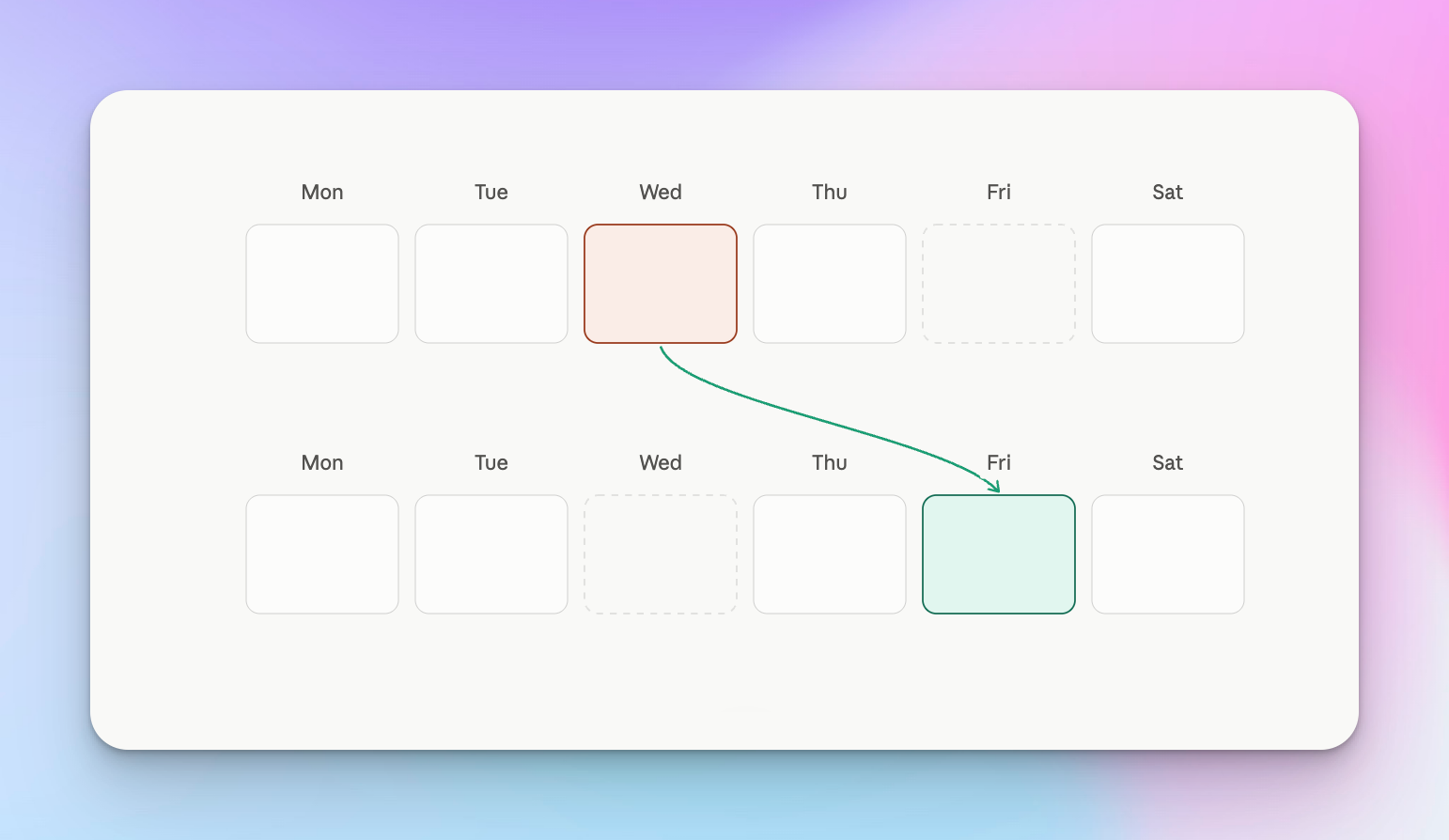
Drop in a one-click link so picking a new time takes ten seconds, not another round of "does Tuesday work?" back-and-forth. Add a quick line asking them to confirm attendance for the new time — costs them ten seconds, saves you a second no-show.
Send exactly one touch in this window
Choose the channel they're most likely to see right now. No stacking a LinkedIn message on top of an email on top of a text. Once they rebook, set an automated reminder ahead of the new time so this doesn't happen twice.
If that first touch is a LinkedIn message, you don't have to log it by hand once HubSpot's connected through HeyReach. The message and whatever reply comes back sync straight to the contact's timeline so there's no separate step of copying the exchange into your CRM after you've already moved on to the next lead.
LinkedIn vs. email: which channel to use and when
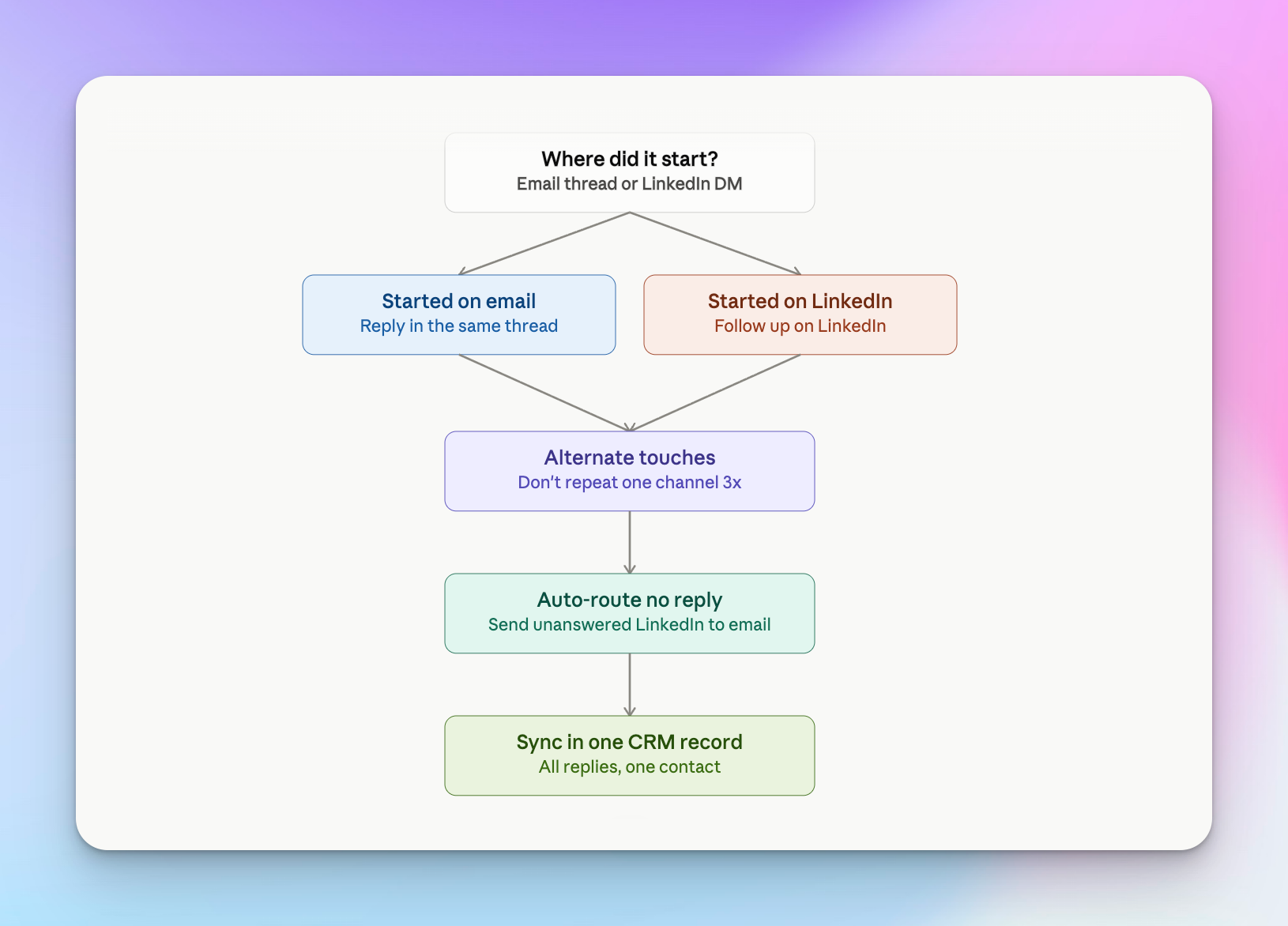
Stick with email if that's where the booking happened in the first place. Formal relationship, calendar invite lost in some long thread, doesn't matter. Keep the reschedule right there. That's where all the context already lives. Keep the follow-up email short and the subject line simple — "meeting reschedule?" beats restating the whole original meeting name.
LinkedIn earns the follow-up when the lead started there too. If the whole relationship's been built through LinkedIn outreach, the tone's already loose, and it usually takes fewer touchpoints to land a reply there than in an inbox buried under three hundred unread emails.
Don't hammer one channel. It's a basic b2b sales habit: alternate across your 30-minute, 24-hour, and 72-hour touches instead of sending three emails in a row. A message on a different channel reads as a real second attempt. The same channel three times in a row reads as nagging.
When LinkedIn's the first touch, set the sequence up so a non-reply routes the lead to email through Instantly or Smartlead instead of just letting a quiet thread sit there. Either way, you're not stuck chasing two separate tools to see who answered where — HubSpot pulls messages, replies, and booked meetings straight from HeyReach through its direct integration, so the full picture lives in one contact record instead of split across tools.
Tone calibration: empathy vs. directness based on context
Read the situation before you write anything. Is this their first no-show or their third? Did they come in warm through inbound, or did you get them through cold outreach? Are you talking to the VP who greenlit the whole deal, or the junior champion who's still building internal buy-in? Each answer changes the message, and if you're not tracking no-show rates by lead source, that's the first gap worth closing.
Go empathy-first for warm leads, high-value accounts, and first-time no-shows, whether it's an early discovery call or a later-stage demo. Give them an easy out — "totally get it, calendars are chaos" — and make the reschedule effortless.
Go direct for repeat no-shows, or when you're still working to qualify leads that haven't shown much engagement. One clear, respectful ask: a specific time, a yes-or-no question, nothing padded. Directness respects their time and yours. You don't owe a fourth gentle nudge to someone who's ghosted you twice already.
Al Davidson, founder of Strategic Sales & Marketing, ran a two-year study on 330 no-show prospects who agreed to reschedule their sales call, and found that 56% missed their meeting simply because they were overwhelmed by internal chaos at their own company. His takeaway: assume your prospect's time is more valuable than yours, and stay patient before assuming the worst.
Message quality matters just as much in a follow-up sequence as it does in a cold outreach sequence. Across 96,051 LinkedIn outreach campaigns, HeyReach's own research found that healthy acceptance rates still stall out when the first message doesn't earn a reply. The same logic applies to recovery: a message that's specific, relevant, and asks for exactly one thing is what actually gets a response — whether it's opening a cold conversation or reopening one that already stalled.
Using HubSpot deal stage data to decide: re-book or recycle
Deal stage is your decision input. No gut calls needed. A late-stage, active deal where the prospect's been engaged for weeks earns a fast, personal re-book. An early-stage lead who no-showed on a first discovery call earns a lighter touch: recycle them into nurture instead of burning a rep's afternoon chasing a maybe.
Don't stop at stage alone, either. The same lead-source and engagement signals that shaped tone above decide urgency here too. A cold-sourced lead who goes quiet after one no-show is a different animal than a champion who's replied to every email for a month and missed once.
The recycle step comes down to one manual move: tag the lead in HeyReach's Unibox, then use that tag to move it, along with any other recycled leads, into a slower nurture campaign. HubSpot's synced deal data can point you to who's worth tagging, but someone still has to click the button.
Once that lead's in the campaign, HubSpot keeps the record automatically: it logs that they joined, plus every message and reply that follows, right on their contact page. Whoever picks up the deal later can see exactly what was said, instead of asking the original rep.
Use the table below as your starting point. Adjust it to your own sales cycle, but keep the basic rule: chase hard when the deal is real, recycle everything else.
The 24-hour and 72-hour follow-up frameworks
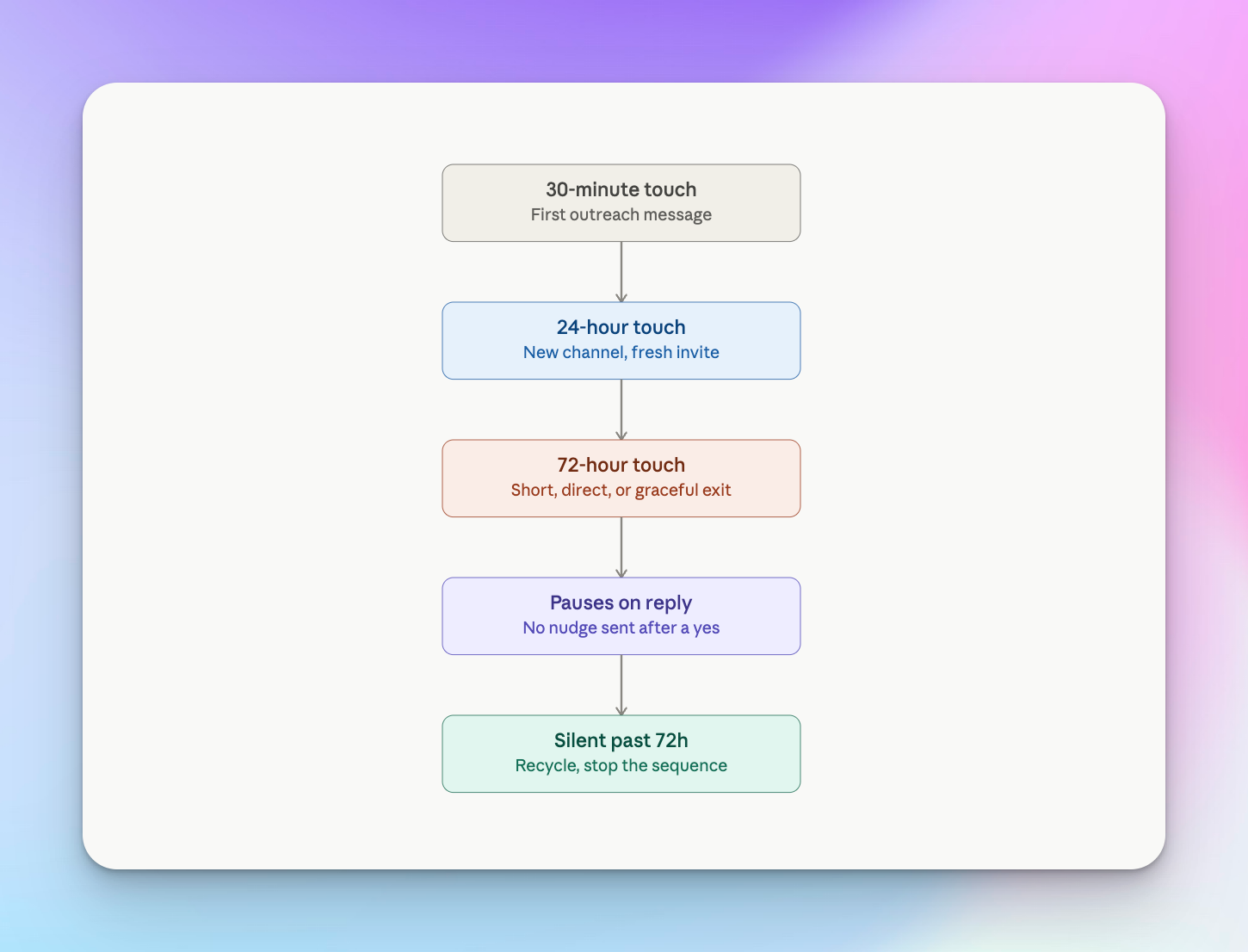
24 hours in, it's the "still keen?" nudge — and it lands on a different channel than your first touch. Restate the reason this call was worth booking in the first place. Acknowledge that calendars get messy, then attach a fresh meeting invitation with two or three times ready to go. Keep it under four sentences; nobody wants to read an essay to reschedule a call.
72 hours in, it's a pattern interrupt. Shorter and more direct than the 24-hour touch: one yes-or-no question, or a soft breakup email that gives them a graceful way out. Breakup messages get a bad reputation, but a well-written one often surfaces a reply that three "just checking in" nudges never would.
Set the 30-minute, 24-hour, and 72-hour touches up as a single HeyReach sequence, and it runs on schedule regardless of who's watching the clock — pausing automatically the moment the prospect replies, so a "yes, let's reschedule" at hour six doesn't get followed by a 24-hour nudge that was already queued. If the whole sequence goes quiet, that's your recycle signal we mentioned above. No need to keep it running past 72 hours.
When to cut the lead vs. keep them in sequence
You don't need a formal cancellation policy to know when it's time to let a lead go. The signals show up on their own. Repeat no-shows, zero engagement across every touch you've sent, or a lead that was never really ICP fit to begin with: that's your cut signal. Releasing them protects your time and your sender reputation, both of which matter more than one stubborn deal.
On the other side of that line: prior engagement, the right ICP, or a single miss — those are your recycle signals. Drop them into a nurture sequence instead of hard-deleting them. A demo no-show today can still convert later on a fresh trigger — a new hire, a budget cycle, a competitor's price hike — and keeping that door open doesn't cost a rep any active time.
Those triggers don't have to be a guess. Clay's HeyReach integration can be set up to flag a recycled lead's profile the moment fresh signals show up, so re-approaching them is a quick tag-and-click instead of someone remembering to check back in six months.
Mechanically, the two paths diverge: a cut lead goes on an exclude list you attach to future campaigns, or gets marked do-not-contact in HubSpot the moment negative intent shows up. A recycled lead goes through that same tag-and-bulk-add flow from the deal-stage call above instead. Still in play, just at a slower pace.
The graceful exit matters here too. When a lead genuinely earns a cut, send a short, no-guilt breakup message. Clean, honest, done in one line. Sometimes that's the message that finally gets a reply.
The system beats the scramble
A booked meeting already proved intent. The no-show doesn't erase that, it just adds one more step before things move again. Recovery is a follow-up process you run every time, not a scramble you improvise under pressure. The rep who has that process re-books while everyone else is still deciding whether to bother.
The order matters more than any single message: respond fast while the slot's still live, pick the channel where they'll actually see it, calibrate the tone to who they are and how many times this has happened, then let deal stage tell you whether to chase the re-book, recycle into nurture, or cut it loose. Skip a step and the whole sequence gets weaker — a perfectly toned message sent on day four does less than an average one sent in the first half hour.
None of this has to run on memory. Whether it's a demo no-show or a missed discovery call, set the system up once with HeyReach and HubSpot working together, and every no-show gets caught and sequenced automatically, while the re-book, recycle, or cut call stays a quick, CRM-informed decision instead of a guess.
Start a free trial and put the system in place before your next no-show happens.

Try it for free
Frequently Asked Questions
What is a sales meeting no-show follow-up?
A sales meeting no-show follow-up is the message you send after a prospect misses a scheduled call without canceling in advance — fast, warm, and specific, whether it's a demo no-show or a discovery-call no-show. A good one acknowledges the miss without blame, offers a real new time, and lands on the channel they're most likely to see.
How soon should you follow up after a no-show?
Ideally within the first 30 minutes. If that goes quiet, layer in a 24-hour touch and a 72-hour touch, switching channels each time so it reads as genuine outreach, not the same message three times. Track no-show rates across your pipeline and you'll see this same-day window is where most recoverable meetings actually get recovered.
Which channel should I use to follow up?
Whichever channel the relationship already lives in. If the meeting was booked through a calendar link in a formal email thread, keep the reschedule there — simple subject line ("quick reschedule?"), short note. If the lead came in through LinkedIn outreach, follow up there instead; the tone's already conversational, and LinkedIn often gets seen faster than an inbox buried in unread email.
How many times should you follow up before giving up?
Three touches: the 30-minute, 24-hour, and 72-hour windows. Past that, extra touches read as annoying rather than persistent, and potentially cost you sender reputation for the next prospect. If the third one doesn't land, close the loop with a short breakup email instead of trailing off.
How do you write a no-show follow-up without sounding pushy?
Assume good faith. Open with something like "looks like our wires got crossed" instead of pointing out they missed the call. Keep the subject line neutral and specific ("still good for Thursday?" beats "following up"), ask one clear question, and attach a way to act immediately, like a one-click reschedule link.