From stack to system: How to design real GTM systems (without adding more tools)
Published:
March 31, 2026
Updated:
May 11, 2026
I’ve audited a lot of GTM stacks over the past few years. And almost every single one has the same problem. The tools are there, the intent is there – and even the strategy looked solid on paper. But… nothing is actually connected.
That’s not a system. A real GTM system turns strategy into repeatable revenue execution by wiring signals, sequences, and syncs into one coordinated motion.
In this guide I teach you:
- How to connect your GTM tools so they execute automatically
- How to capture signals, orchestrate sequences, and sync outcomes across teams
- How to wire LinkedIn outbound into your lifecycle without gaps or manual work
- How to diagnose execution drifts before they cost you pipeline
What a GTM system actually is (and why most teams don’t have one)
A real GTM system does one thing consistently: When state changes, execution follows. Automatically.
Lifecycle stages update → and outreach launches.
Replies arrive → and ownership shifts.
Renewal windows open → and relationship motion begins.
No one has to check. No one has to forward. No one has to remember.
Now compare that to how most sales teams actually operate.
- A lead moves to MQL → someone has to check it manually.
- A positive LinkedIn reply comes in → it stays inside an inbox.
- A renewal window approaches → CS finds out too late.
Notifications replace infrastructure. Spreadsheets bridge gaps between tools. Ownership shifts happen through DMs instead of logic.
Each tool works, but they don’t operate as ONE system.
And when signals don’t consistently translate into motion, execution becomes dependent on human memory instead of infrastructure.
Again… not a real GTM system; simply a stack pretending to be one.
Why most GTM systems fail (the wiring gap)
When signals don’t translate into motion and motion doesn’t sync back into your system of record, performance doesn’t collapse overnight.
It drifts, and that drift usually shows up in five places:
1. Signals that don’t trigger action
Lifecycle stages change. Intent spikes. Replies land.
The CRM reflects the update, but nothing else happens automatically. No campaign enrollment, ownership shift, or follow-up logic.
The signal doesn’t produce motion.
Over time, this creates lead lag, inconsistent follow-ups, and manual triage that shouldn’t exist in a modern GTM setup.
2. LinkedIn isolated from lifecycle
Outbound often runs as a parallel motion instead of a connected one.
A conversation starts on LinkedIn, but the CRM doesn’t reflect it. A lead engages with marketing, but the SDR has no context when reaching out. A renewal account replies, but CS doesn’t see the signal in time.
Each tool works, but they don’t share state.
Fragmentation across automation tools, social media channels, and CRM systems is one of the biggest causes of GTM inefficiency.
This is what GTM silos look like in practice.
3. Replies that never reach CRM
A positive reply lives inside an inbox.
No deal is created. No stage is updated. No owner is reassigned.
From a leadership perspective, the pipeline looks clean. Forecasting based on that data is essentially fiction.
In reality, valuable buying signals are sitting outside your system of record.
We’ve seen this happen repeatedly: An SDR books replies on LinkedIn. The AE doesn’t see them for 48 hours. The deal is created manually days later. Reporting shows “slow response time.”
But in reality, the system just wasn’t wired.
4. Campaigns that ignore seat capacity
Outbound volume increases, but distribution isn’t structured.
One sender carries most of the load. Another sits underutilized. Limits are hit unpredictably. Progression slows in some campaigns but not others.
Nothing appears “broken.” But routing becomes inconsistent, and scalability becomes fragile instead of controlled. At volume, capacity management is an architecture.
5. Renewal signals ignored
Accounts enter renewal windows, but no proactive relationship motion is triggered.
Customer success teams find out about renewal risk at the worst possible moment — during the renewal call itself. There are no executive touchpoints. No lifecycle-aware campaigns. No shared visibility across sales and CS.
Retention becomes reactive instead of intentional. And by the time renewal conversations begin, the system is already behind.
Across all five failure points, the pattern is the same: signals exist — but they don’t create motion.
The fix isn’t more tools; it’s structural wiring that always lives in three layers.
The three layers of a real GTM system
Here’s the simplest way I’ve found to think about it: Every real GTM system has three layers.
Signal → Sequence → Sync.
Miss one, and the system breaks. Overbuild one, and it still breaks.
Let’s walk through it the way I build it.
Layer 1 in GTM systems— Signal
Signals are triggers for motion, not something a human has to notice.
They’re state changes that automatically start execution.
Common GTM signals look like:
- A lifecycle stage changes (Lead → MQL → SQL)
- A prospect replies positively on LinkedIn
- A high-intent action occurs (pricing page visit, demo request)
- An account enters a renewal window
- Enrichment updates a key lead qualification field
If a human has to notice it before anything happens, it isn’t a real signal layer yet. That’s human routing.
In a real system, signals create motion instantly.
Layer 2 in GTM systems— Sequence
This is also where most GTM stacks fracture. And in revenue operations terms, a fractured Sequence layer is where pipeline visibility dies.
LinkedIn gets treated as a side experiment instead of a lifecycle-aware execution engine. That’s a design flaw. In reality, outbound should operate as part of the broader GTM strategy alongside marketing automation and PLG initiatives.
The Sequence layer must understand:
- Lifecycle context — why this person is being contacted
- Rep capacity — who should execute it
- Conversation state — what has already happened
Without those three, execution becomes noisy instead of coordinated.
Here’s how that shows up inside HeyReach:
- When wired through HubSpot workflows and workflow automation layer (webhooks or no-code tools like Zapier, n8n), lifecycle changes can automatically enroll contacts into the correct campaign — no CSV imports, no manual assignment.
- Tags act as routing logic, not labels — determining how leads move across campaigns and owners.
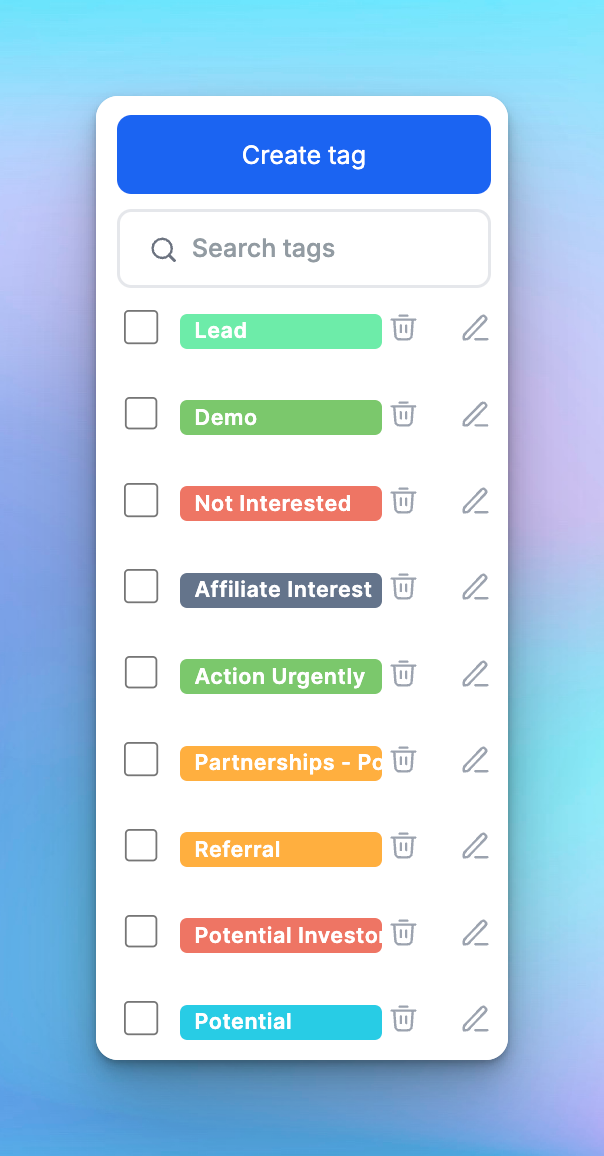
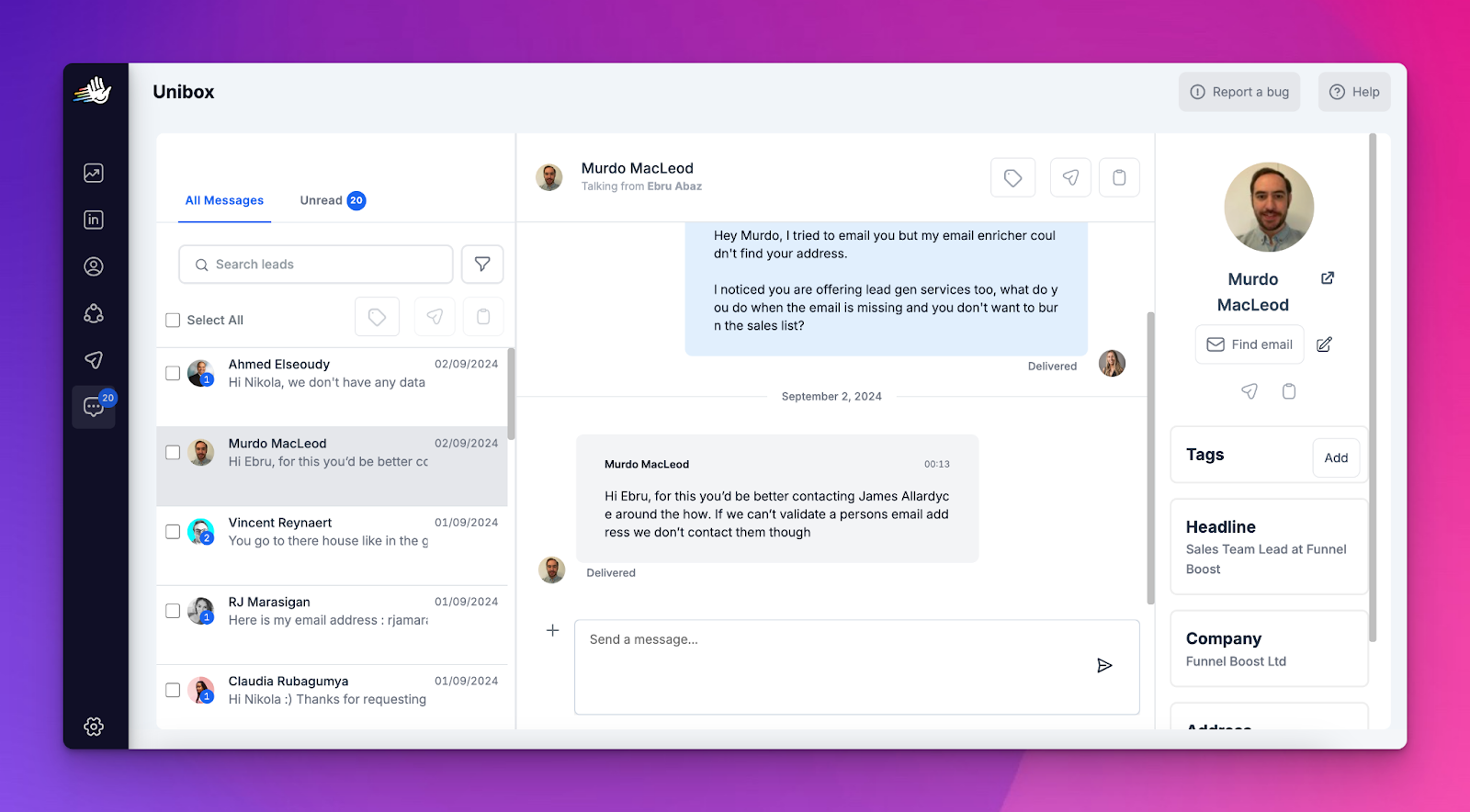
- Unibox centralizes all LinkedIn replies across seats, so conversation state is visible in one place.
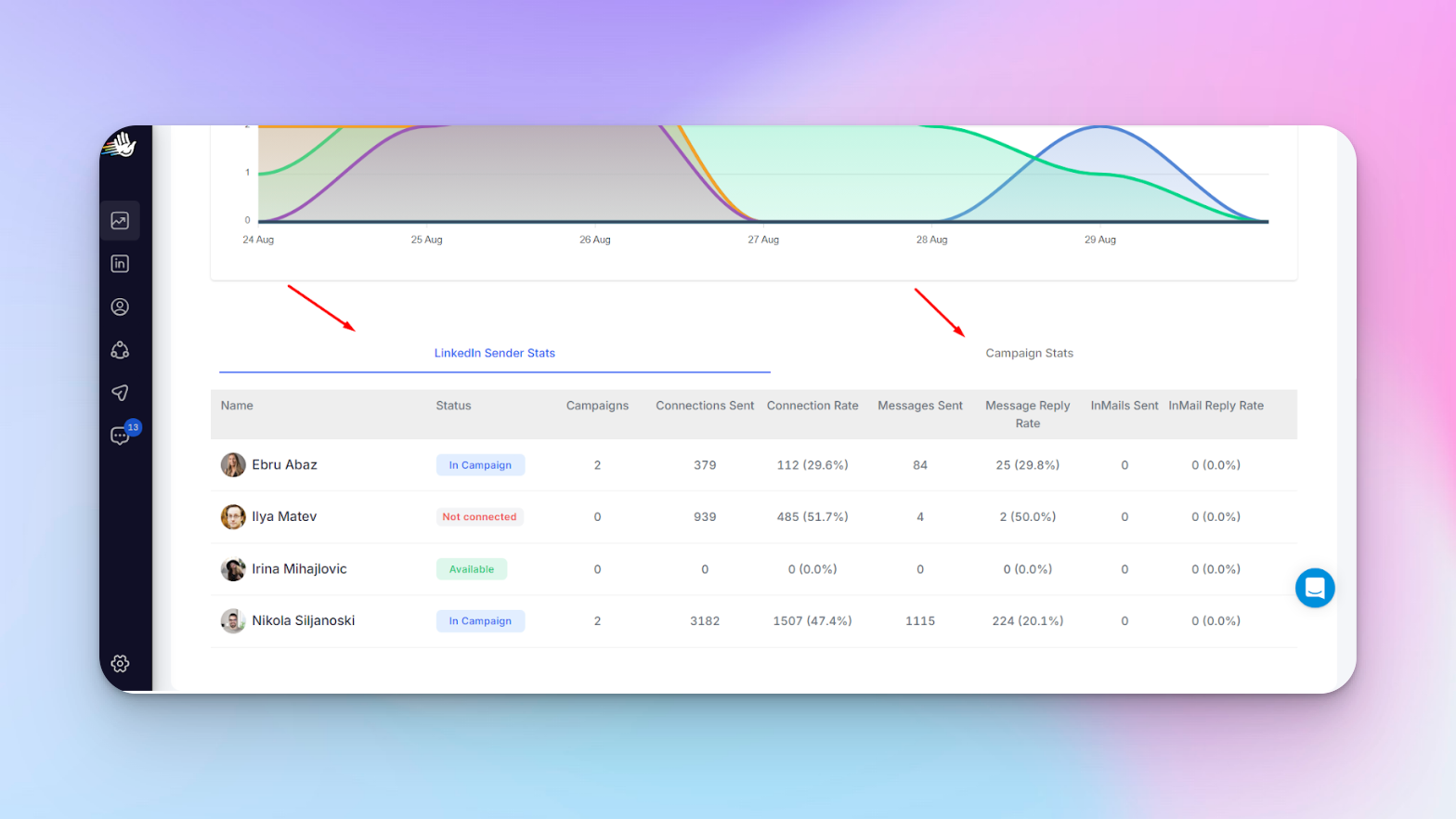
- Seat rotation distributes outreach volume safely across connected accounts, respecting ¢per-account limits structurally.
- Outbound webhooks fire on key events (reply received, connection accepted, campaign completed) so downstream systems can react instantly.
Tip: If you're running AI agents in your stack, HeyReach MCP extends this layer further with AI-powered routing — allowing Claude, n8n, or Clay to read campaign state, apply tags, and route leads programmatically.
This way, HeyReach becomes the execution engine inside your GTM system. It plugs into your existing GTM ecosystem, doesn't replace it.
Layer 3 in GTM systems— Sync
This is the layer most teams underestimate.
Execution without sync is chaos.
- If LinkedIn conversations don’t update CRM fields…
- If deals aren’t created on positive replies…
- If ownership doesn’t reflect reality…
You don’t have orchestration; just channel noise.
The Sync layer ensures that execution changes system state — not just inbox state.
In practice, this means pushing reply context, campaign activity, and routing outcomes back into your CRM via automation (webhooks, Zapier, n8n) so lifecycle fields reflect real conversation progress.
A real Sync layer ensures:
- CRM reflects true conversation state
- Deals are created or updated automatically
- Ownership shifts without manual intervention
- Sales, marketing, and CS operate from the same source of truth
When that's working, sales, marketing teams, and customer success teams aren't running separate GTM motions — they're running one.
That only happens if outbound activity flows back into the system of record. Otherwise, LinkedIn becomes a black hole — full of activity, invisible to leadership.
The entire architecture in one loop
Signal → Sequence → Sync.
Signals create motion. Execution runs in context. Results update reality.
When wired correctly, this loop turns a stack into a system.
To operationalize this, every signal must map to:
- A defined sequence in HeyReach
- A visible system update in your CRM
The table below shows what that mapping looks like in practice.
Stack vs system diagnostic: Where you actually stand
Before you redesign anything, run this test.
Most SaaS teams track KPIs. Far fewer track whether the signals behind those metrics automatically create motion.
I use this checklist every time I audit a stack. It’s a simple framework that GTM teams and revenue operations leaders can use to evaluate their GTM tech stack.
Each “yes” earns you one point. Answer honestly.
- When lifecycle stage changes, does outbound trigger automatically?
- Do LinkedIn replies sync back into CRM?
- Is ownership reassigned automatically on positive replies?
- Are campaigns mapped to lifecycle stages?
- Is seat capacity considered in routing?
- Do renewal signals trigger proactive outreach?
- Are tags lifecycle-bound or manual?
- Can you trace a signal to its resulting sequence?
- Is LinkedIn execution visible to sales leadership?
- Can you pause or reroute campaigns based on CRM changes?
How to interpret your score
0–3 → Fragmented stack
Your tools exist — but your signals don’t drive motion.
Your next move isn’t optimization. It’s wiring.
4–7 → Semi-wired system
You’ve automated pieces. But critical transitions still rely on manual intervention.
Execution works — until edge cases appear. This is where most teams sit.
8–10 → Structured system
Signals consistently convert into action. Action syncs back into the system of record. Routing reflects lifecycle reality.
At this stage, you’re not reacting to revenue signals. You’re orchestrating them.
Most teams land in the middle. And that’s actually good news.
Because the gap between “semi-wired” and “deterministic” isn’t about more automation tools. It’s architectural clarity.
Architecture examples
Let’s make this concrete. Here’s what fully wired execution actually looks like across Signal → Sequence → Sync.
If you scored high in the diagnostic, your system should already resemble this.
If you scored in the middle, this is what “fully wired” execution actually looks like when Signal → Sequence → Sync is working end-to-end.
These aren't theoretical playbooks — they're the three loops I see wired most often in GTM teams.
Example 1 — MQL → LinkedIn activation
Signal: A lead moves from “Lead” to “MQL” inside your CRM based on scoring.
Sequence: That lifecycle change automatically enrolls the contact into the correct LinkedIn campaign in HeyReach — mapped to their ICP and aligned to available rep capacity.
Sync: Outreach activity and replies push back into the CRM so marketing, SDRs, and AEs operate from the same context.
Under the hood: HubSpot workflow triggers when lifecycle stage becomes MQL → webhook sends contact fields (name, LinkedIn URL, owner) to HeyReach → contact is auto-enrolled in the mapped campaign → reply event webhook creates or updates the deal and assigns the correct owner in CRM.
No Slack nudges. No CSV exports. No manual assignment.
Example 2 — Positive reply → AE routing
Signal: A prospect replies positively in HeyReach Unibox.
Sequence: The conversation is tagged, and handoff happens automatically based on predefined routing logic to the appropriate AE.
Sync: A deal is created or updated in the CRM. Ownership reflects reality. Conversation context stays visible across teams.
Under the hood: HeyReach fires a reply event webhook → automation layer reads reply tag → CRM creates/updates deal → ownership reassigned based on territory rule.
No forwarded screenshots. No “Who owns this?” messages.
Example 3 — Renewal window → Relationship sequence
Signal: An account enters its renewal window inside the CRM.
Sequence: A relationship-focused LinkedIn campaign launches from HeyReach to maintain executive engagement before renewal discussions begin.
Sync: Engagement activity logs back to the account record, giving CS visibility before renewal conversations begin — not after risk appears.
Under the hood: CRM workflow triggers 60 days before renewal date → webhook enrolls contact into renewal campaign → engagement events sync back to account timeline.
No last-minute scrambling. No disconnected outreach. Just lifecycle-aware execution.
The pattern is consistent:
Signals create motion. Motion runs in context. Results update system state.
When that loop is wired correctly, GTM stops reacting to revenue signals — and starts orchestrating them.
What to do next
If you scored below 8, don't try to fix everything at once.
Pick the one signal that's creating the most lag right now:
- MQLs sitting idle before outreach starts
- Positive LinkedIn replies not reaching AEs
- Renewal accounts getting contacted too late
Wire that one signal across all three layers — Signal, Sequence, Sync — until it runs without Slack reminders, CSV exports, or manual assignment.
Once one loop runs without human intervention, the same Signal → Sequence → Sync architecture extends naturally into multichannel outreach.
The GTM system maturity ladder
Once you’ve wired your first loop, here’s how GTM systems typically evolve.
They don’t break overnight. In fact, they drift, patch, automate, and eventually mature.
The diagnostic showed you where you are. The maturity ladder shows you where you’re headed.
Every team moves through the same three stages.
Level 1 — Reactive stack
This is where most GTM teams start — and many never leave.
The tools exist. But motion depends on humans noticing things.
- Lifecycle stages update, but someone has to notice.
- Replies arrive, but routing depends on notifications.
- Ownership shifts through DMs instead of logic.
- Outbound runs — but outside lifecycle context.
Signals exist. They just don’t create automatic execution.
At this stage, execution depends on attention rather than infrastructure.
Level 2 — Automated workflows
This is where teams feel “advanced.”
Systems start talking to each other.
- Zapier or n8n connects tools.
- Some lifecycle triggers exist.
- LinkedIn activity partially syncs.
- Routing works — most of the time.
It’s better. But it’s fragile. Marketing automation exists, but orchestration doesn’t.
- A webhook fails silently, and no one notices.
- A lifecycle field updates — but doesn’t trigger the right sequence.
- Ownership shifts — but only after someone double-checks.
- Seat capacity isn’t governed by logic — it’s governed by habit.
- Replies sync, but not consistently.
You’ve automated movement. But you haven’t designed deterministic execution.
At this stage, the system works… until it doesn’t.
Level 3 — Deterministic revenue system
This is where execution becomes predictable.
Every lifecycle signal maps to a defined sequence.
- LinkedIn execution is lifecycle-aware.
- Replies sync back into CRM in real-time.
- Seat capacity is structured and distributed intentionally.
- Routing is consistent across teams.
- No qualified signal sits idle.
Execution doesn’t depend on reminders. It depends on the wiring.
At this level, HeyReach isn’t “another LinkedIn tool.”
It’s the execution engine inside your Sequence layer — connecting Signal → Sequence → Sync without human bottlenecks.
When all three layers are wired correctly, revenue motion becomes deterministic, not dependent on reminders, dashboards, or human follow-ups.
Stop adding tools. Start connecting them.
Tools don’t create GTM systems. Your wiring does.
And you don’t need more software. All you need are deterministic connections between:
- Lifecycle signals
- Outbound execution
- CRM synchronization
If your signals don’t trigger sequences — and those sequences don’t sync back into your system — you don’t have a GTM system yet.
Design your Signal → Sequence → Sync layer intentionally.
Use HeyReach as the execution engine that keeps LinkedIn fully wired into your revenue system.
If you’re a GTM engineer or RevOps lead tired of manually stitching tools together, start here:
Pick one lifecycle trigger in your CRM.
Connect it to a HeyReach campaign without any lengthy onboarding.
Wire reply events back into your system of record.
Prove the loop once. Then scale it.

Try it for free
Frequently Asked Questions
What’s the difference between a GTM stack and a GTM system?
A GTM stack is a list of tools. A GTM system is what happens when lifecycle signals automatically trigger execution, and execution updates your CRM. If motion requires reminders, you don’t have a system.
What does Signal → Sequence → Sync actually mean?
Signal: A state change. Sequence: Automated execution. Sync: CRM updated to reflect reality. If any one of those layers is disconnected, orchestration breaks.
What’s the first thing RevOps should wire?
Pick one lifecycle trigger — for example, “Lifecycle stage becomes MQL.” Trigger outbound automatically. Wire replies back into CRM.
Why is CRM sync non-negotiable for LinkedIn outreach?
Because inbox activity isn’t pipeline. If replies don’t create or update deals, leadership is flying blind. Outbound must update system state — not just message threads.
How do you scale LinkedIn without breaking sender accounts?
Distribute volume structurally across multiple seats. Govern capacity through system logic — not manual monitoring. Capacity management is architecture, not a growth hack.